If you’re writing a love story, you may think you’re writing a romance novel but it may be women’s fiction. Books in the romance genre have a specific structure and conventions that readers expect to find. In this post, I explain what makes a romance a romance, and how not all love stories are made the same.
First, some definitions:
- Basic elements of a story:
- A protagonist with a desire or goal.
- Conflict – the external and/or internal obstacles that will prevent the protagonist from getting what she wants.
- Plot – the external events that happen in the story. Usually, the protagonist’s choices and decisions will drive the narrative forward until the climax.
- Climax – the moment where the protagonist will either achieve her goal or fail.
- Inciting event – the moment that kickstarts the plot. This is where everything changes for the protagonist.
- Character arc – how a character changes and grows as the story progresses. If the protagonist needs to learn that “greed is bad” at the climax, then she’ll start the story being greedy, like Ebenezer Scrooge in A Christmas Carol.
- Point of view (POV) – who is telling the story. In romance, it is very common to have dual POVs, alternating chapters between the hero and the heroine, but romances can also be told from only one character’s POV.
The Romance Genre
The Romance Writers of America define genre romance as having two main elements: a central love story and an emotionally satisfying and optimistic ending.
In a romance book, the story revolves around the relationship, not the protagonist’s individual goal. The ending will see the couple in a committed relationship. So if your love story involves the couple not ending up together, then your book is not genre romance and would fit better into women’s fiction.
- The protagonist is the relationship and how it comes to be. The characters can each have a personal goal, but the plot will make sure this goal can only be reached through a relationship.
- The conflict revolves around the relationship. Everything that happens either helps bring the characters closer or creates tension that could break them apart.
- The inciting event is usually the meet-cute. The hero and heroine meet for the first time or reconnect after some time apart. In some tropes, like friends-to-lovers, where the characters already have a relationship, something will cause a change that will propel them to fall in love.
- What drives the narrative forward is whether the relationship will work, whether the characters will resolve their differences and/or misconceptions in order to be together.
- The climax of the story will be when the characters solve their conflict and profess their love for one another.
- The character arc can only happen because of the relationship with the other person. The change that happens is what will make the relationship work.
The Women’s Fiction Genre
The Women’s Fiction Writers Association defines women’s fiction as a story in which the driving force is the protagonist’s journey toward a more fulfilled self. It can include elements of mystery, suspense, romance, or any other genre. When it includes romantic elements, the couple doesn’t have to end up together.
In women’s fiction with romantic elements, the story will revolve around the protagonist’s arc of change and not on whether she’ll live happily ever after with the love interest.
- The protagonist’s main goal usually has to do with career, self-development, self-discovery, family, friends, etc.
- The conflict revolves around the personal growth of the protagonist. Everything that happens will force the character to change and help/prevent them from reaching their goal.
- The inciting event is when something changes for the protagonist. It can be meeting the love interest, but it can also be something else: a death in the family, getting promoted or fired, having a child, moving to a new location, etc.
- What drives the narrative forward is whether the protagonist will reach their goal or learn a lesson.
- The climax of the story will be when the protagonist solves the external or internal conflict and achieves her goal or fails.
- The character arc is independent of the romance. The romance is only partly responsible for the character’s growth, not the main reason.
When women fiction includes strong romantic elements, the inciting event can be the meet-cute and the climax can be when the protagonist professes her love. In these cases, the lines between romance and women’s fiction become blurred, but usually, the protagonist’s self-development is more important than the relationship.
The growth of the protagonist happens as she interacts with people other than the love interest. The protagonist will not be able to make the relationship work until she learns from these other facets of her life. The love interest will not be enough to create this change in her. Or, in other cases, the love interest will help the protagonist fix the main problem they are facing, which will be resolved at the climax.
Examples:
The Worst Best Man by Mia Sosa – enemies-to-lovers romance – dual POV
- Inciting event: Lina is offered the opportunity to become director of wedding services at a high-class hotel. As an independent wedding planner, this job would be a huge break for Lina, doubling her income.
- Conflict: In order to get the job, she’ll have to collaborate with marketing expert, Max, the best (worst) man at her failed wedding years ago. Lina blames Max for convincing his brother, Andrew, to leave her stranded at the altar.
- Plot: Max and Lina have to prepare a presentation to wow the hotel’s CEO. Max tags along with Lina to learn about her wedding planner duties and help her create the best pitch. This forced proximity causes them to grow closer and eventually, fall in love. Andrew creates doubts in Lina and Max by insinuating that Lina still loves him and Max will always be second choice.
- Climax: Max tells Lina he wants to be with her even if he’s second choice. Lina is sure she never loved Andrew and Max is the only choice for her.
If Mia Sosa would’ve wanted to write this as women’s fiction, she would’ve used only Lina’s POV and included more interactions with her family, friends, and clients. Lina would’ve had an internal obstacle that prevents her from getting the job of her dreams (an insecurity, lack of organization, etc.) which she’d need to overcome in order to get it.
Since it’s written as a romance, the main obstacle in Lina’s way is Max, and the only way to get the job is with Max’s help. The main internal obstacle is Lina’s lack of trust toward Max because of how he ruined her wedding. The climax is not whether Lina gets the job (she does) but whether she can trust Max and fully commit to him.
How to Fail at Flirting by Denise Williams – romance – single POV
- Inciting event: Naya’s friends start a to-do list for her to get a new life. Item #1: sex with a stranger.
- Conflict: the stranger she hooks up with, Jake, is hired as a consultant at the university where she works at. His company will be evaluating whether Naya’s department will be cut. If Naya continues to date him and her colleagues find out, it could cause her to lose her job.
- Plot: Naya continues to date Jake in secret. Her abusive ex, Davis, returns to work at the university and starts harassing her.
- Climax: Naya and Jake profess their love for each other.
In this book, Naya has a personal career goal – to save her job – but the plot and the external obstacles are all related to Jake. Her internal obstacles stem from the remaining trauma and shame she has from her abusive relationship with Davis. Jake helps her heal and gain in confidence, which helps her fight for her job and confront Davis. It is only because of her relationship with Jake that she can resolve her internal conflict and achieve her goal.
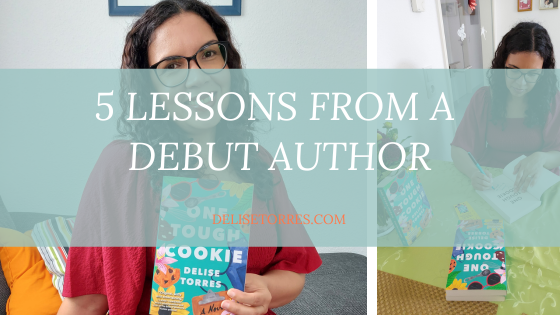
One Tough Cookie by Delise Torres (my debut!) – women’s fiction with romance
- Inciting event: Karina meets Ian, the sexy new mechanic at the cookie company where she works at.
- Conflict: Karina starts dating Ian even though she doesn’t want a relationship or believes in love
- Plot: Karina ends up falling in love. She sabotages her relationship with Ian and breaks up with him. Through interactions with her friends, boss, and a therapist she learns her deep-seated fears stem from her mother.
- Climax: Karina and her mother reconcile. This finally gives Karina the confidence to commit to Ian.
As I was revising this novel, I had to make the choice whether to make this a full-on romance or stick with women’s fiction. I wanted to include a food inspection subplot, which would’ve required a complete redesign of the characters and the plot. So, I decided to lean more into women’s fiction by expanding Karina’s friendship with her boss, Lacey, and Karina’s relationship with her mother.
Note that the climax is not Karina professing her love to Ian but her reconciling with her mom. If I had wanted, I could’ve had Karina not end up with Ian. He could’ve been someone who finally pushed her to face her fears and misbeliefs. But, because I’m a hopeless romantic, I decided to go with the happy ending.
This makes my book much harder to market. My publisher chose to market it as a romance but based on the reviews I’ve read, readers seem disappointed and confused about not getting the cute, fun romance they were expecting.
Knowing what I do now, I probably would’ve structured the book much differently, to make it clearly land in the women’s fiction genre. That’s why it’s important to know what type of story you want to tell before you start writing. Then you can decide which genre would fit the best and structure it accordingly.
Too Soon for Adiós by Annette Chavez Macias – women’s fiction with romance
- Inciting event: Gabby meets her biological father for the first time at her mother’s funeral. He offers her a house.
- Conflict: Gabby doesn’t want a house or a relationship with her father, but she needs money to pay her mother’s medical debt. She decides to renovate the house in order to sell it. For this, she’ll have to move to the town of Sonrisa where her father lives.
- Plot: Gabby hires a contractor, Diego, and they butt heads as they renovate the house. She grows closer to her dad and falls in love with Sonrisa and Diego.
- Climax: Gabby decides to stay in Sonrisa and confesses her love to Diego.
If Annette Chavez Macias had wanted to turn this into a classic romance, she could’ve had Gabby move to this town after inheriting the house from her deceased father. The plot would’ve revolved more around the enemies-to-lovers romance with Diego. But this story is about Gabby finding a home. Diego is part of her reason for staying in Sonrisa but not the only one.
Conclusion:
For any type of story you want to write, it’s important to know what point you’re trying to get across to your reader.
Do you want to explore a specific trope or a type of relationship? Then your genre is romance. You would decide what conflict you want your lovers to have, what deep-seated insecurities will keep them apart, what changes they’ll need to go through in order to get to that happily-ever-after.
Do you want to explore how a protagonist overcomes obstacles to reach a goal as she falls in love? Then your genre is women’s fiction. In this case, make sure the romance doesn’t overtake the plot, but is balanced between other facets of the protagonist’s life.
Though there are many popular books that blur the line between women’s fiction and romance, they can be harder to market. Fans of the romance genre want to see the couple fall in love, and may be bored or annoyed by scenes where the heroine is exploring her career or her family relationships. Fans of women’s fiction want to see a deep exploration of a character and may not like reading about the protagonist’s sexy escapades with the love interest, especially if this overshadows her growth in other areas of her life.
I hope this helps bring clarity to the differences between the romance and women’s fiction genres. Let me know in the comment section below if you have any questions.
If you’re navigating genre, structure, and emotional depth, join The Emotional Draft to recieve monthly craft insights directly to your inbox.
Want personal feedback? Explore my book coaching services >